This Year's MINT-EC & DIN Video-Challenge: Gender Equality & Standardization
Gender equality has nothing to do with technology?
Wrong.
For example: Women are more likely to die in car accidents than men. Do you know why? Because crash test dummies have been modeled after the male body. In a female body, height and weight distribution are different.
Or: Women (unfortunately for good reason) do not feel comfortable when it is dark on factory premises, in parking garages, subways, or similar places. They therefore require brighter and more uniform lighting.
These are just two examples of structural inequalities that society is only slowly beginning to notice. It is time to change that.
A global standards community thought the same thing and published DIN EN ISO 53800:2026-05 (Guidelines for the promotion and implementation of gender equality and the empowerment of women) in April 2026. An exciting section deals with gender-equitable goods and services, stating that an organization can improve gender equality by ensuring its products, services, and public provisions are designed with everyone in mind.
Your Task
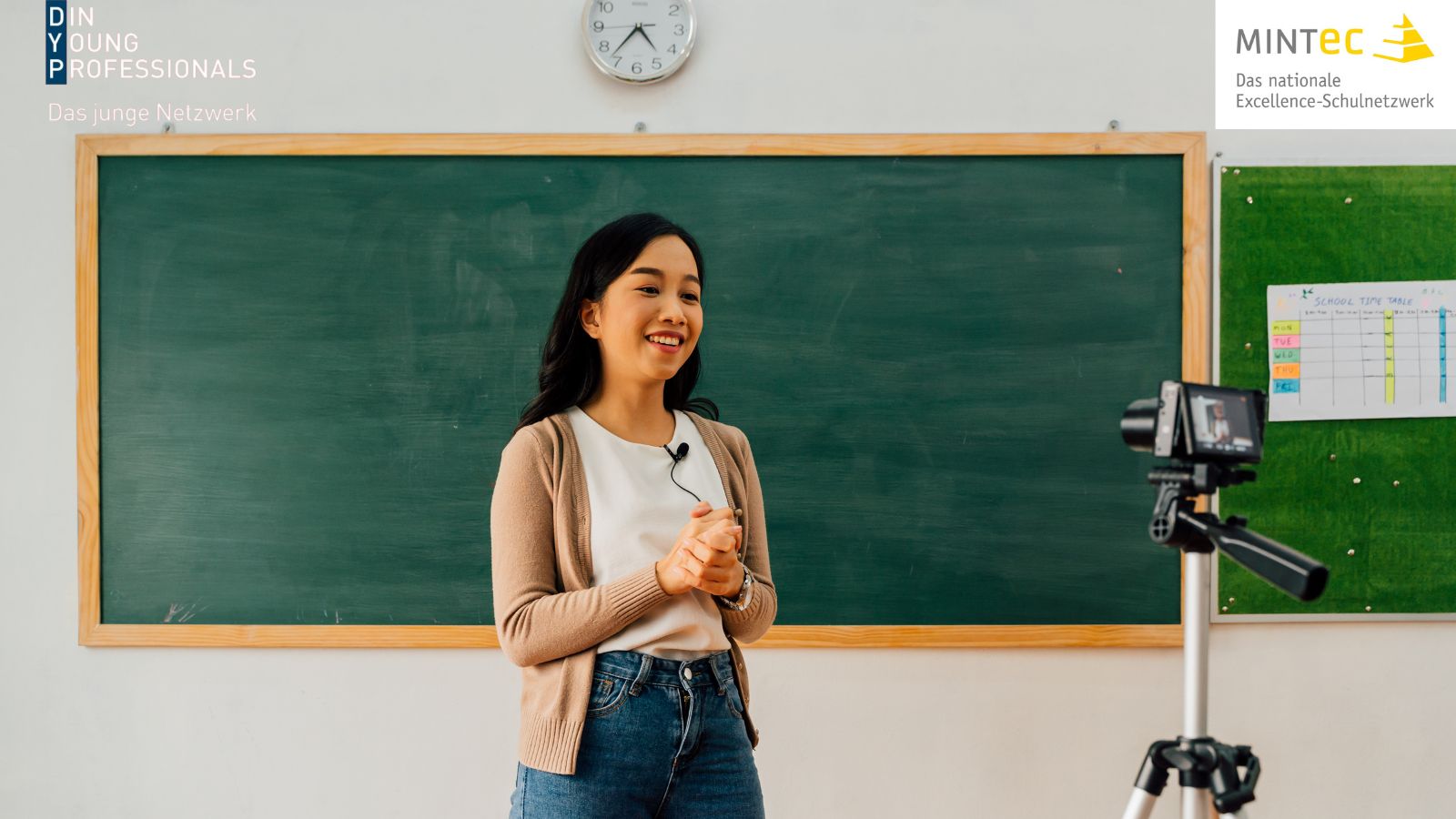
Create a short video (approx. 3 minutes, in English) addressing the following questions:
Do you know of other examples where gender equality could be achieved through concrete requirements?
Where could standardization drive gender equality through concrete requirements for a product or service?
Convince us with your creativity, your connection to standardization, and the surprising insights you gained while exploring this topic!
A Note from our Jury Member: “For me, gender equality is a central concern... By integrating the gender perspective and empowering women and girls through gender mainstreaming, for example in the chemical sector, one can find better, innovative, and fairer solutions for a sustainable future.” — Anna Holthaus, Chemist & Project Lead for "Know-How for European Chemicals Focal Points"
Looking Back at Last Year: A Historic Finale!
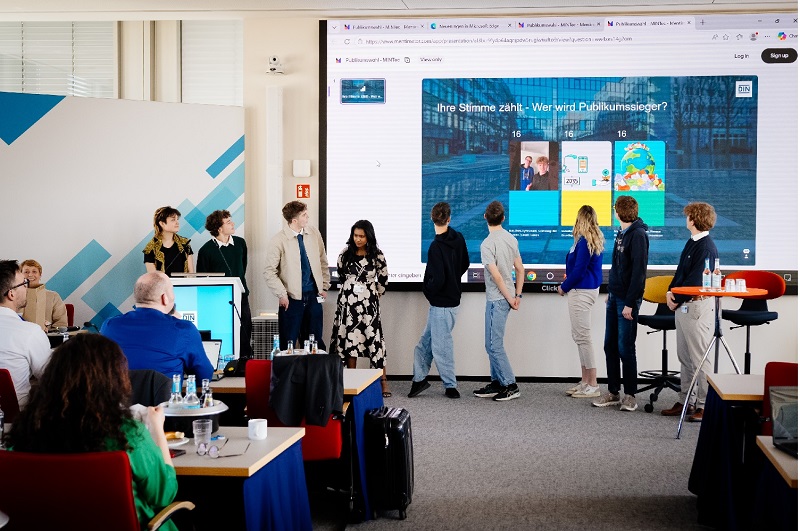
Together with MINT-ec, we looked for creative answers last year on how standards make our world safe and sustainable. The submitted videos proved that standardization is anything but dry!
During the audience award at our member dialogue on the Ecodesign Directive, a true statistical miracle occurred—an exact tie of 16 to 16 to 16 votes. Because a single decision was impossible, we spontaneously crowned three brilliant winning teams:
A huge thank you for your great commitment, you proved that the future of sustainability is in the best hands with you!