Press
Shaping the Future of European Standardization
An Interview with the New CEN President
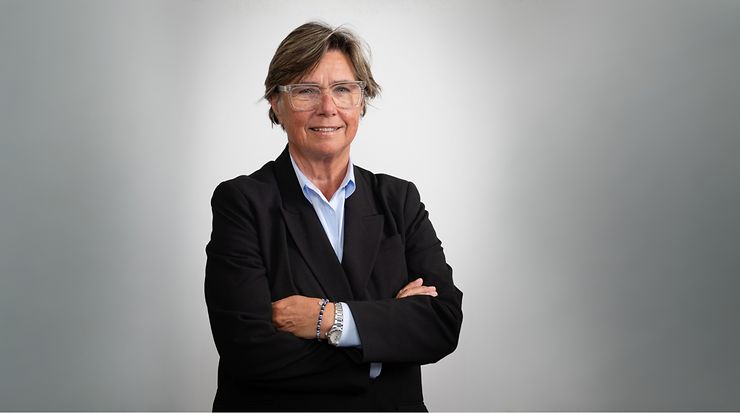
At a time when European standardization is facing profound change, Ulrika Francke has taken office as President of CEN – the European Committee for Standardization.
Drawing on experience from the private sector, national standardization and international leadership roles – including serving as ISO President in 2022 and 2024 – she brings a unique perspective to the future of standardization in Europe.
In this interview, Francke reflects on her personal path into standardization, the importance of diversity and gender equality, the challenges and opportunities facing the European standardization system, and her expectations for the CEN Annual Meeting in Cyprus this June.
You have had a long and diverse career spanning the private sector, public administration and international standardization – and have now been elected President of CEN. Can you share a little about your personal path into standardization?
Alternative: When I was CEO of a consulting business, we had employees who took part in different standardization committees. We understood the value and importance of standards, but for us as consultants this was quite costly. This led me to discussions with SIS – the Swedish Institute for Standards – about the system. When I was elected to the Board of SIS, I had to, of course, learn much more about how the standardization system works and the many stakeholders involved.
That was really the starting point of my deeper engagement in standardization. Over time, it led me to take on roles at both the national and international level, including having been elected as ISO President in 2023 and 2024.
You are the first female president of CEN. Why you believe it is important to include diverse perspectives and promote gender equality in standardization?
Standards shape products, services and markets. If we want standards to reflect the needs of society and industry, we need a broad range of expertise, experiences and perspectives working on them together. I think it is important that we have diverse representation in the committees so that standards can work for everyone.
European standardization is currently at a turning point. What would you say are the key challenges for European standardization today, and how do you expect standardization to evolve in the coming years?
As ISO president, I got an even broader perspective on the global standardization system and how important it is to safeguard the system and our experts. At the same time, it became increasingly clear that the standardization system as a whole is changing, and that means that the European standardization system will also have to evolve going forward. There are challenges arising from new legal requirements and from AI. We need to reform, become more digitalized and work faster. Standards will still be needed in the future, but we as organizations have to address the needs of our industries and other stakeholders. Simultaneously, we need to remember that trade is international and not only European, so we will also need to interact closely with ISO and IEC.
One important aspect of making standardization fit for the future is, for example, the development of SMART Standards. They transform traditional standards into machine-readable, machine-applicable and digitally transferable data, enabling seamless integration into automated systems and digital workflows. And we are working on this globally.
The CEN Annual Meeting will take place in Cyprus this June. What are your expectations for the event and what outcomes do you hope to see?
I hope that we will take decisions in Cyprus that will serve as the platform for our future – the Long-Term Vision. We have different groups working on the various elements and hopefully they will materialize during, or at least by, next year. It will be a lot of work, not only at the CEN and CENELEC level, but also for all national organizations and the European Commission. At the same time, I am encouraged by the strong commitment across our community to shape the future together. We know that we need to evolve, and that is exactly what we are working on across the European standardization system. By combining our expertise and commitment, we can build an even stronger, more agile and future-ready system for the benefit of industry and society.
Your expertise matters: Shaping the Future of European Standardization together
European standards are developed by experts from industry, research, public authorities and civil society. Contribute your knowledge and help shape standards that make a difference for businesses, consumers and society across Europe. Get involved